

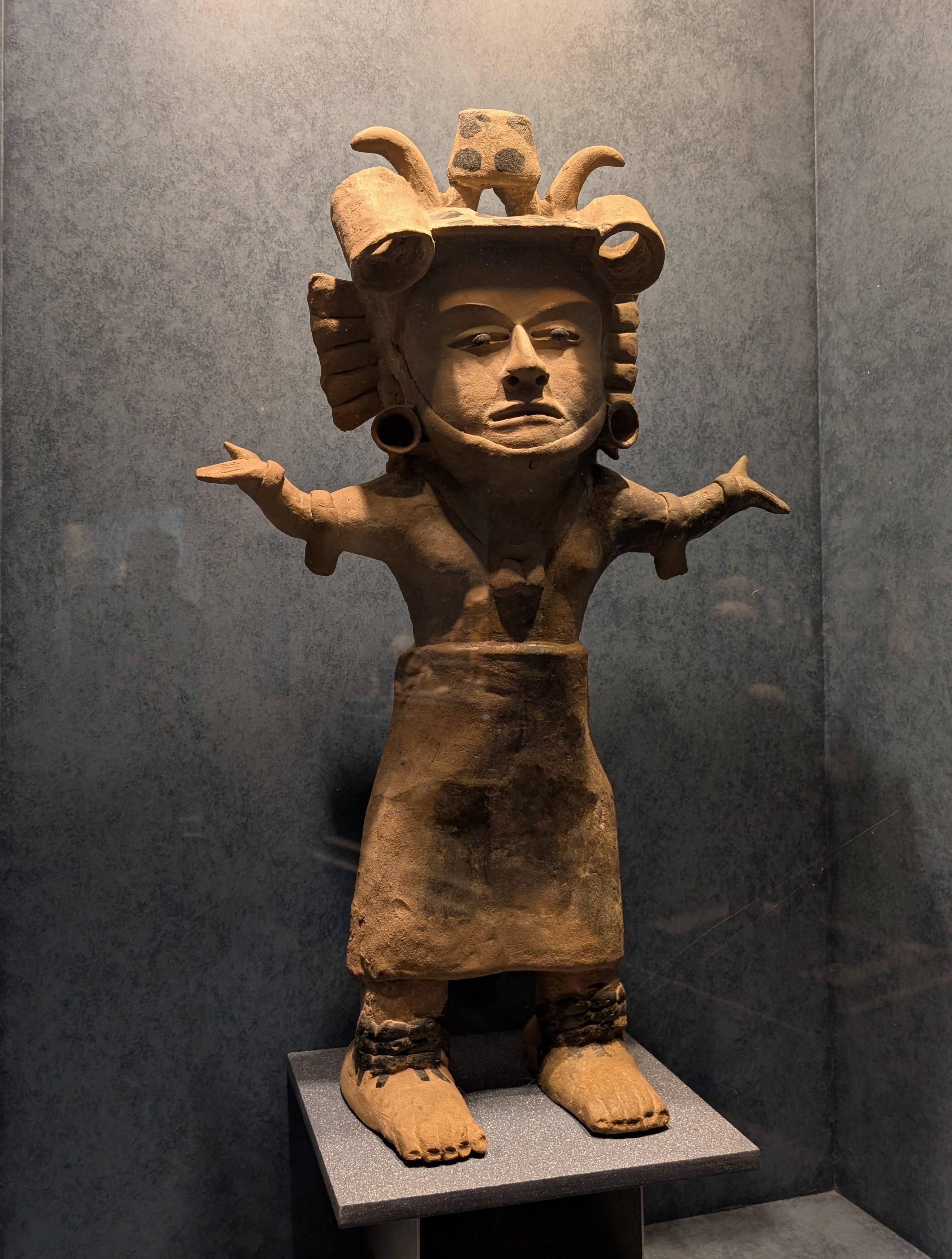
Feminine figure representing the origin of life. The outstretched arms are an expression of dance, which was important in religious ceremonies.
The other morning, leaving our Mexico City apartment after reading the news, I had the thought, “Everything I do is meaningless in the face of all this violence, and in the face of death.” But then we spent that day in the National Museum of Anthropology, where thousands of ancient objects from the civilizations of Mexico, all made with extreme care, are housed in a magnificent building, also made with care and attention to every detail — and I came back to myself and my purpose.
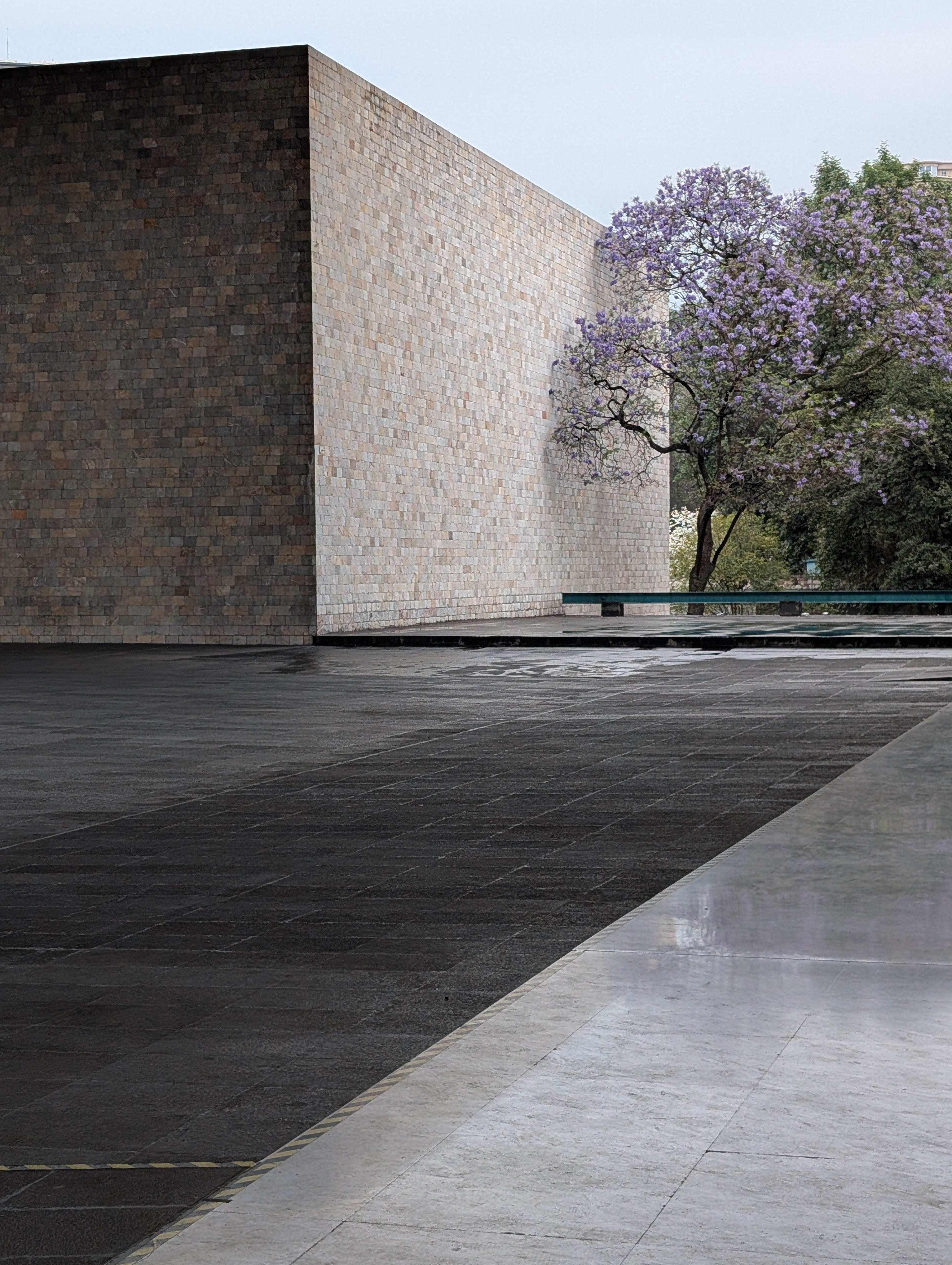
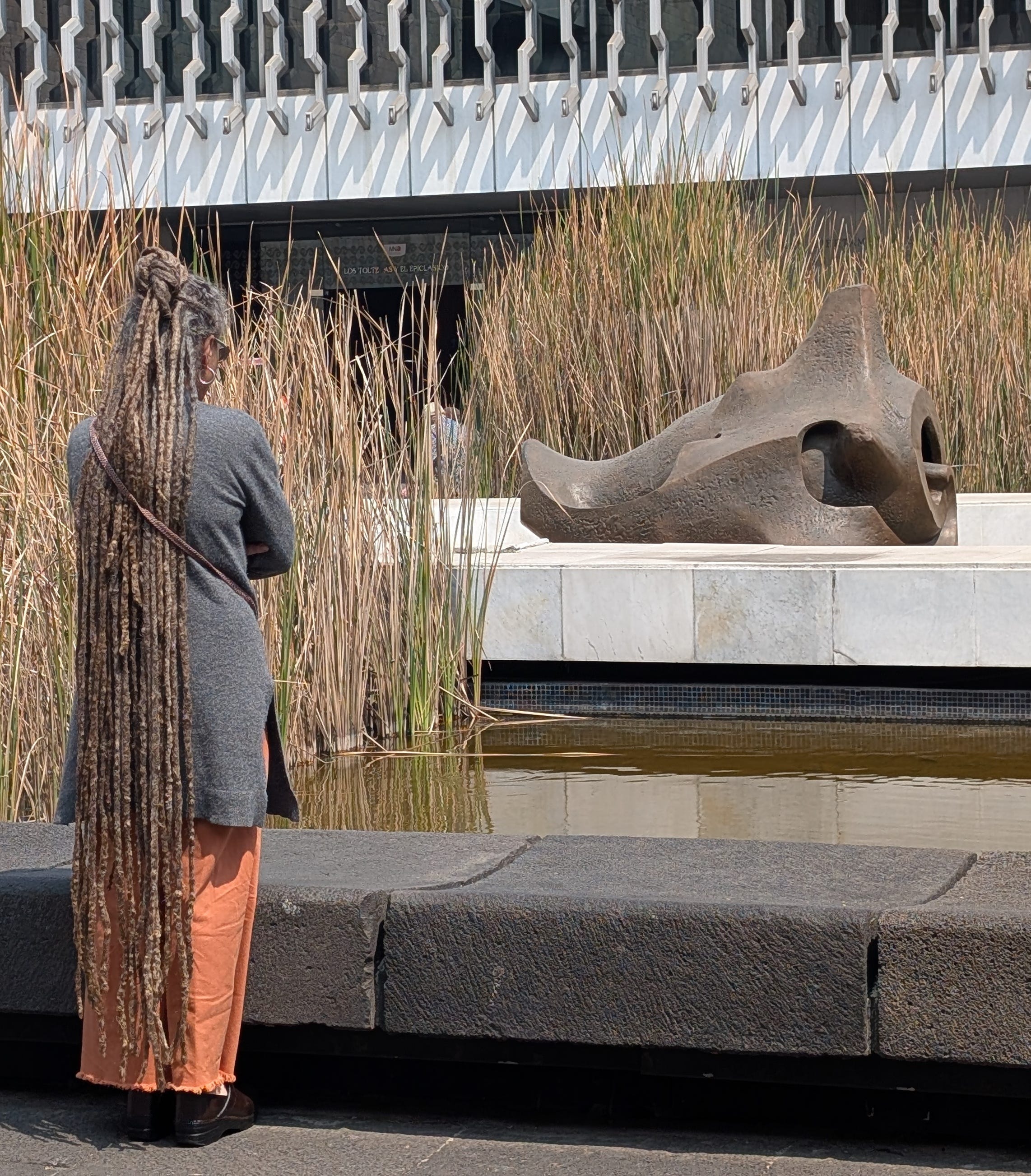
Views of the museum courtyard.
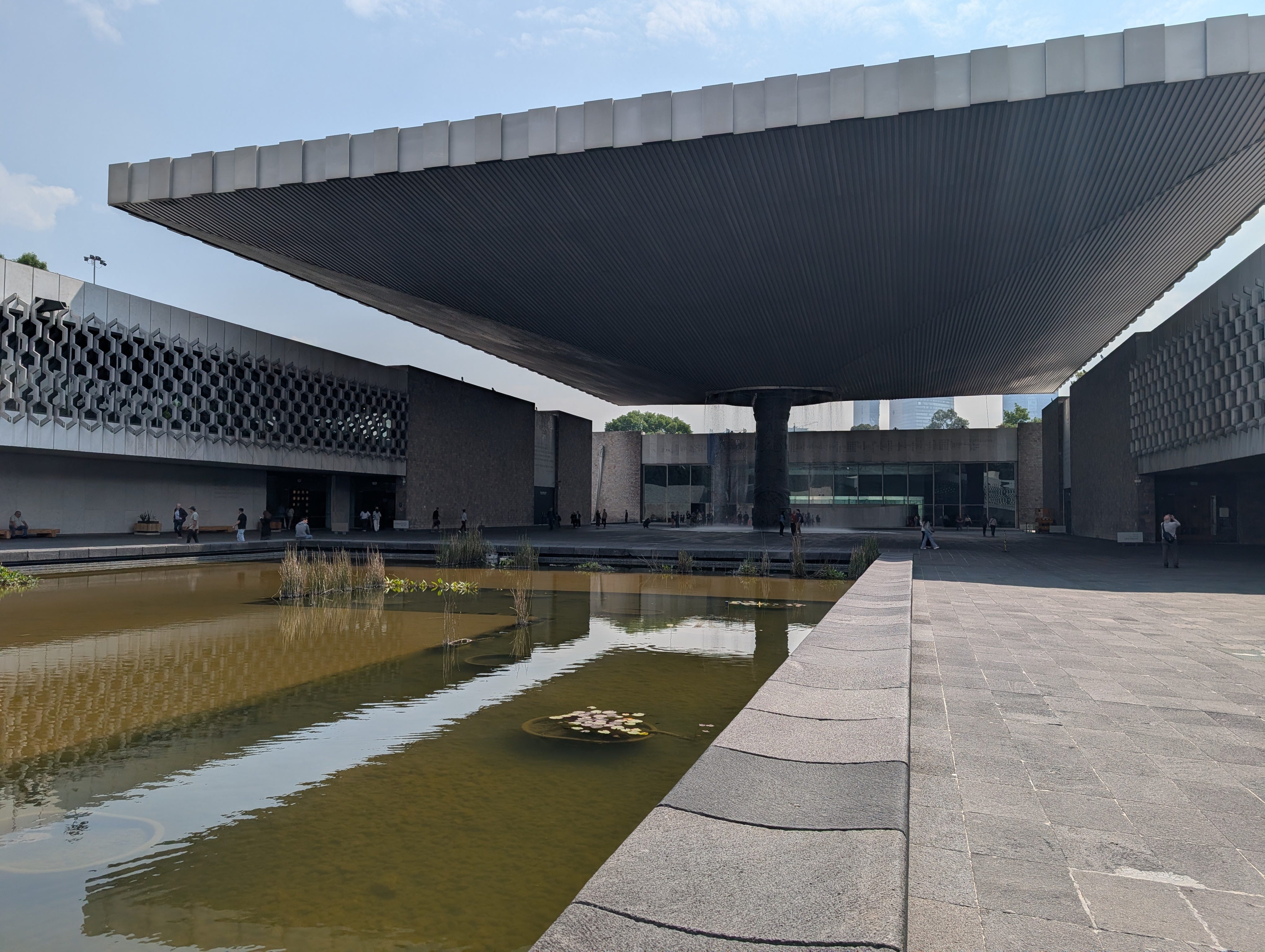
The roof of the courtyard appears to be supported by a massive column, which is surrounded by a fountain that cascades from above. The column is carved with symbols of Mexico’s past as well as scientific achievements looking toward the future, symbolizing the country’s commitment to honor its complex past of ancient civilizations, European colonialism, and a vibrant present.
We are living in a time when the concentration of money and power, ruthless economic competition, and the demand for everything being done immediately are forcing the prioritization of speed and efficiency over perfection and care. Carefulness will increasingly be found in individual and small enterprises that exist more and more outside of, and independent from, mass production. In Japan, master craftspeople are revered as “living treasures”, but there is a real question of whether our western societies will have the capacity in the future to appreciate and preserve not only what artists, craftspeople, poets, and musicians produce, but the traditions, rooted in care and attention, that are the foundation for these arts.
For a long time, we’ve counted on arts organizations and institutions to do this work of preservation, education, and passing on. Not only are those institutions under political and financial assault, but their “gatekeeping” has been criticized as exclusionary and discriminatory — and rightly so. That in itself is another subject.
The point I want to make here is that living in a very different culture, as I’ve been doing for these weeks — one that has had a long history of political disruption, colonialism, violence, discrimination, and economic hardship, and where individuals could not expect much of anything from outside themselves and their communities — makes certain things clear. The vibrancy of the arts here is the result of a choice: people have taken that responsibility upon themselves because they know that art is intrinsic to life. The work that is shown in the National Museum of Anthropology is almost entirely unattributed: these are extraordinary objects that were made by anonymous master craftspeople. Many of the people who live in Mexico today have spent their lives knowing and valuing those traditions more than they value personal recognition. The indigenous woman sitting in the street selling exquisite needlework take pride in her craft, sells it to make a small living, and smiles when she sees that you appreciate it. The older man who takes my hand and draws me into an impromptu salsa in a city street is filled with an ebullient joy that he freely gives to me. I doubt that either of them has an easy life. But I would argue that both are more in touch with their humanity than many of us.
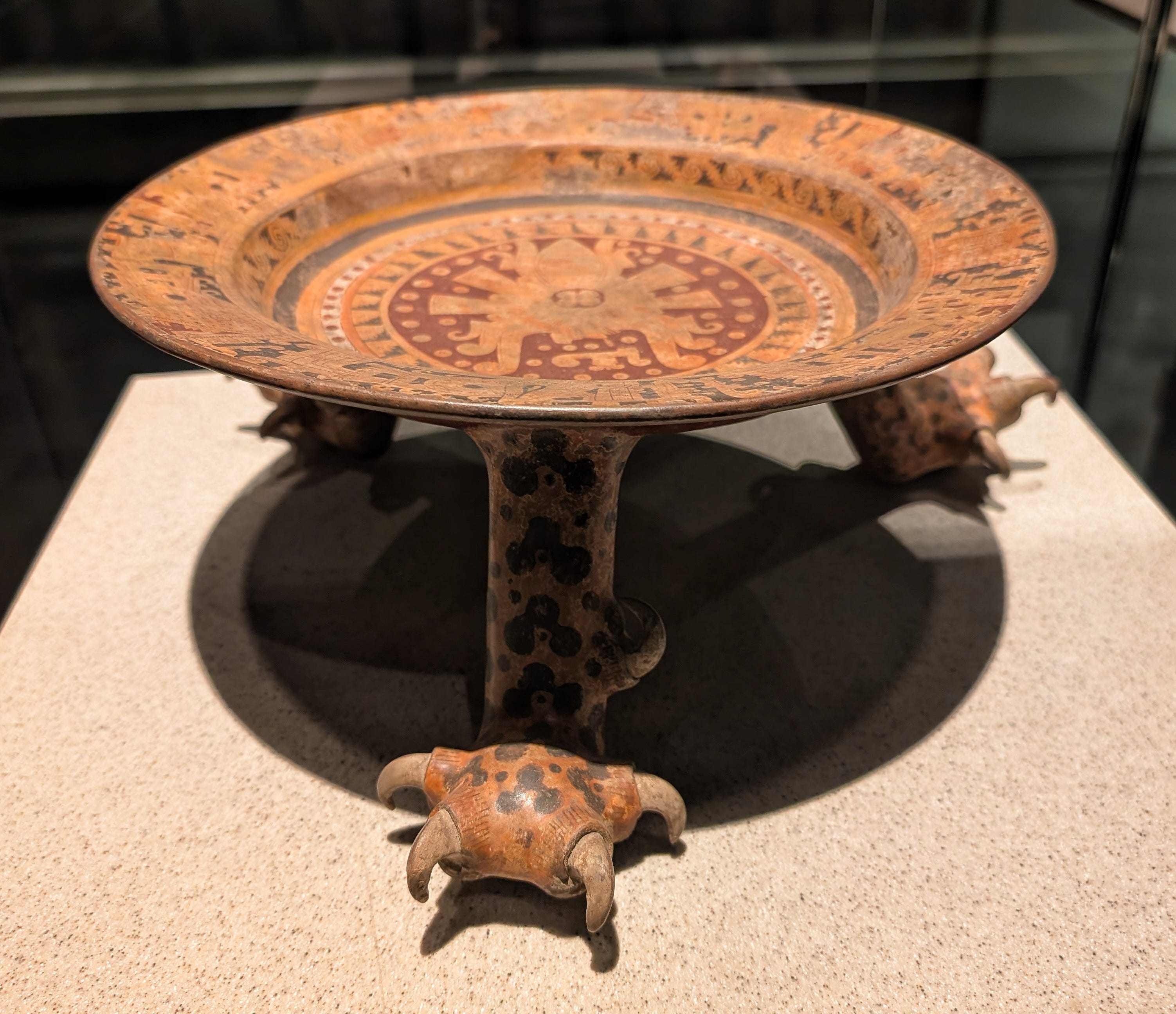
Ceremonial plate with jaguar feet. 1200-1521 A.D.
The sickness and malaise we are experiencing in the western First World is a disease that comes not only from the top down — which it surely does — but because too many of us have lost the conviction that art for art’s sake is vital for our own spirits, and for our communities. When we, as artists, buy into the capitalist model, thinking that money, fame, titles and rewards are the measures of our self-worth as creators, we have already missed the point and made it far harder for ourselves. One does not have to be a famous poet to write words that matter. Art and music that lift people up can happen when two or three people get together to make some “house music,” or dance in a park.
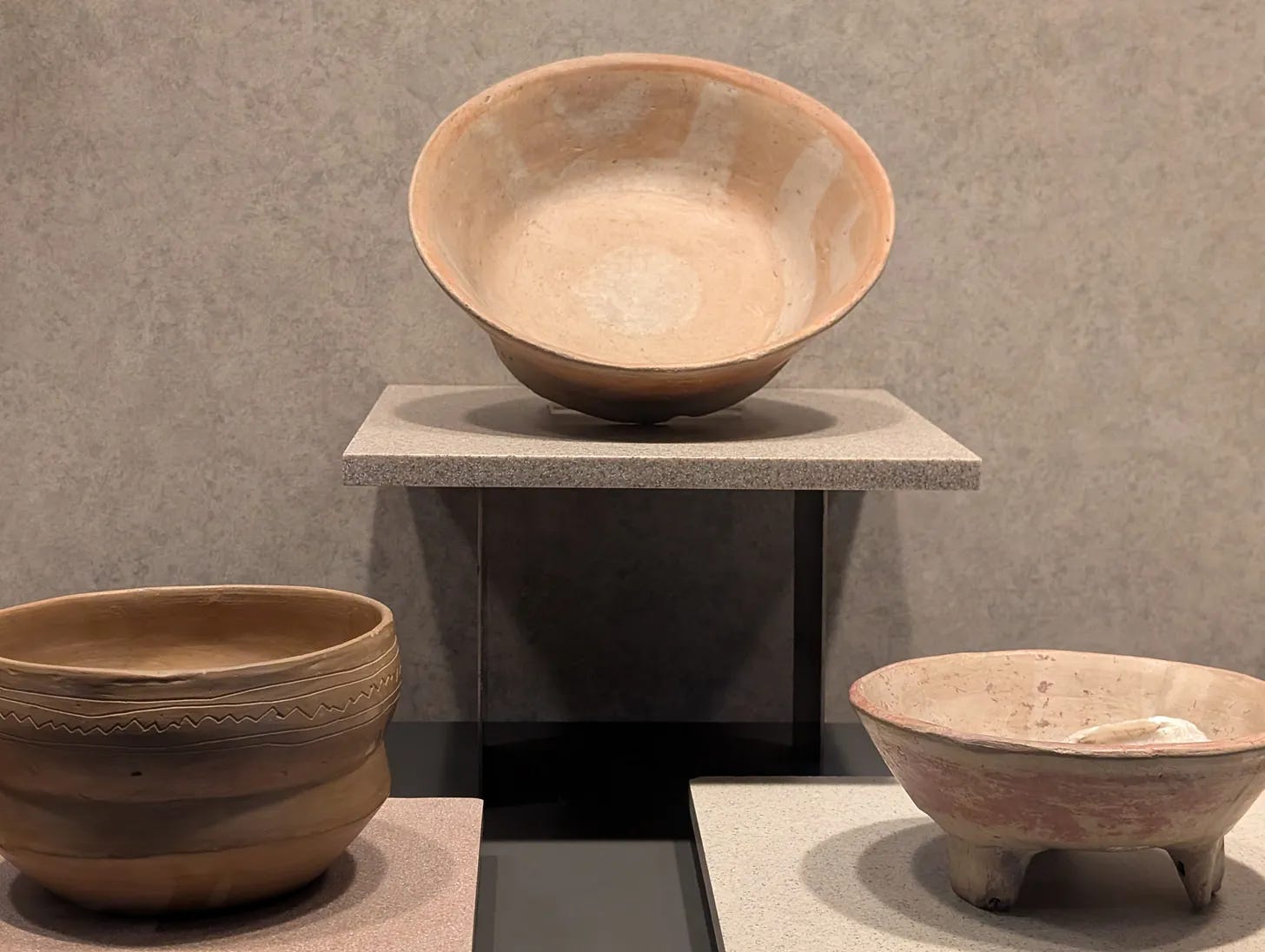
Finely-made ceramic bowls from Monte Alban that incorporate mother-of-pearl in their glaze.
Sewing and embroidering a beautiful garment creates satisfaction in the maker and the wearer; carving a wooden spoon or throwing a ceramic bowl with care and skill create functionality and beauty that affect the user every day. The real point, as my father often said, and the creators of the beautiful art and craft objects I’ve been seeing here clearly knew, is that doing a thing at all is worth doing it well.
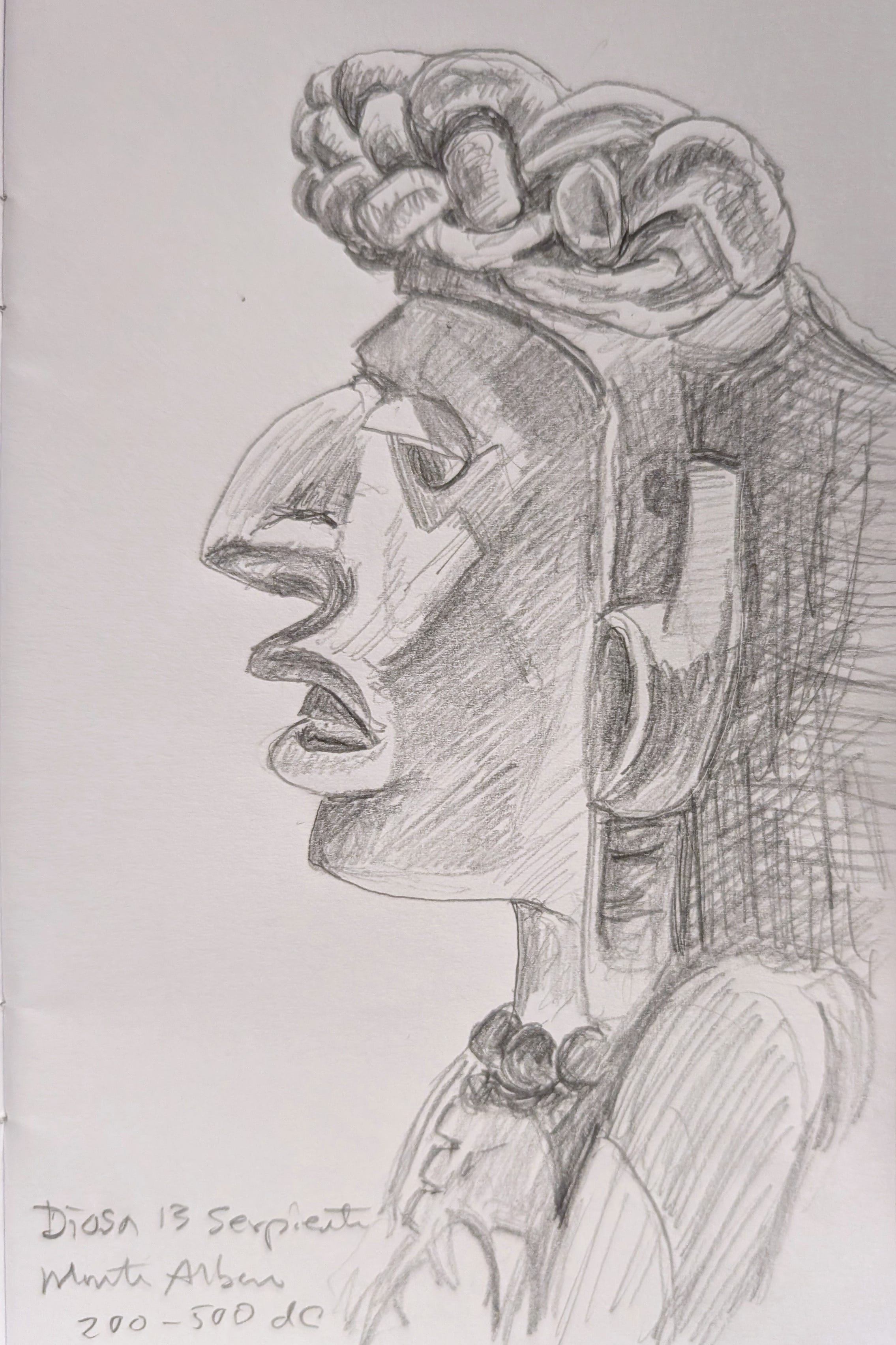
My sketch of a portrait urn from Monte Alban, 200-500 A.D.
So it is worth taking the time to put our writing through a long series of edits. It’s worth it to draw in order to better understand what we’re seeing. It’s worth it to practice our instruments with the quiet satisfaction of knowing we’re gradually improving. It’s worthwhile to make things with care, to the best of our abilities, leaving something of value whether the maker is known or anonymous. And it has never been more vital to encourage one another, and younger people, for whom the question of life’s meaning is ever more fraught.
The Cassandra Pages is 23 years old today. I started it at the beginning of another war, and it’s still going in spite of changes and disruptions, both personal and global, and because of friendships, love, and inspiration from the past and the present. It is my way of resisting and defying the forces that attempt to strip the meaning and beauty out of life, and I’m more determined than ever to keep it going.
Happy blogiversary! I will forever be grateful to our blogs for bringing us together.
And thank you for these beautiful photographs and drawings and meditations on art and meaning. My teenaged son is currently planning to make his life making music, and while I worry about the practicalities of making a living (especially in an unknown future) I tell myself that at least I know he will always have a deep source of spiritual sustenance and joy -- because making music with other human beings is good for the soul.
This is the deep inhale and exhale I needed right now. Thank you x a million.