
Temperature Adjustment


We left the Mexico City apartment at 8:30 am on Tuesday, flew at noon to Toronto, and then had a long layover and a delay before flying to Montreal and finally climbing into our own bed around 2 am on Wednesday morning. There wasn’t as much snow on the ground here as when we’d left, but there was still quite a bit, and it felt… very cold, even though the air temperature was a lot warmer than in early March. I’m sitting here in my studio, quite bundled up in three layers with a wool sweater, and a scarf wrapped around my neck, and I still feel cold!
The need for “temperature adjustment” is not just literal. As I touched on before, the overall ambience of the people and the culture in Mexico is warm, but less so in urban Quebec -- and that’s perhaps the hardest part for me. J. and I seem to be drawn to other places with a more Mediterranean or Latin culture, as well as climate, because (I think) we really like the warmth and vibrancy of those societies. Having grown up in a small upstate New York town in the 1950s and 60s, my default is to be open, warm, and friendly; to speak to strangers and have them greet me back; to assume that I can trust them and that we’ll find some common ground. Of the places I’ve lived and visited for longer periods, probably New England was the hardest adjustment for me, with its reticence and privacy — and I lived there for over thirty years. Wherever we are, we seem to make friends and build community - but it’s easier and more natural in some places than others.
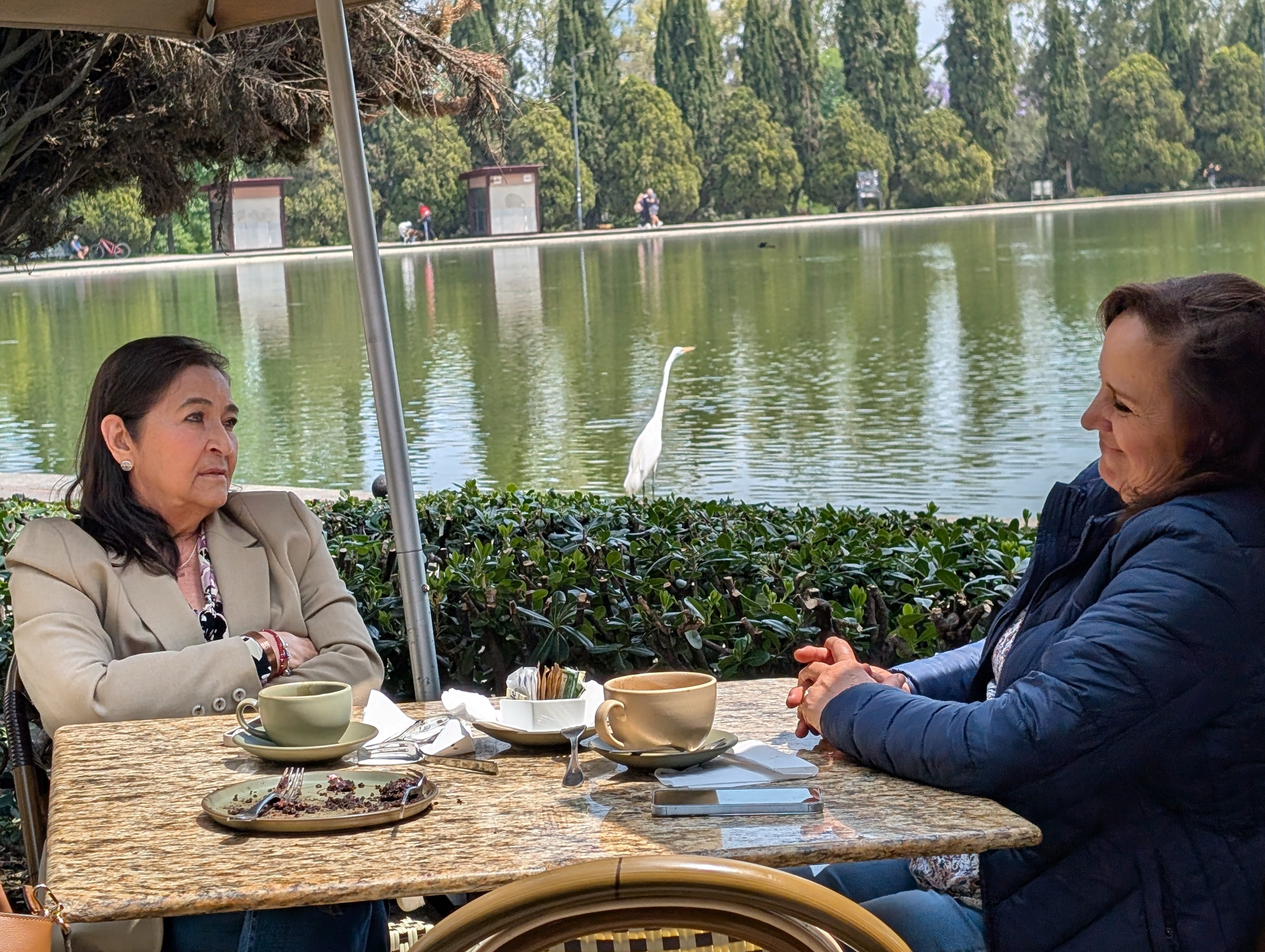
Language is another issue that can augment isolation, or open up communication and connection. My French is much better than my Spanish. But I felt that I was able to connect and communicate with Mexicans, using a combination of basic Spanish, pantomime, and lots of smiles, far more easily and gracefully than I’m able to connect with many French-speaking Quebecers, where language issues are often political. Going to a primarily single-language country like Mexico is a different thing, to be sure. Although their history with the Spanish colonizers was heavy, violent, and discriminatory, Spanish is the shared language of the Mexican people and there is no deep defensiveness about language as there still is in Quebec. Therefore, my attempts to communicate and to learn were always met with warmth, pleasure, shared amusement, and ease. Duolingo tells me that at my current level, high A1, “You can chat a little, if someone is patient and ready to help” — which is exactly what I found.
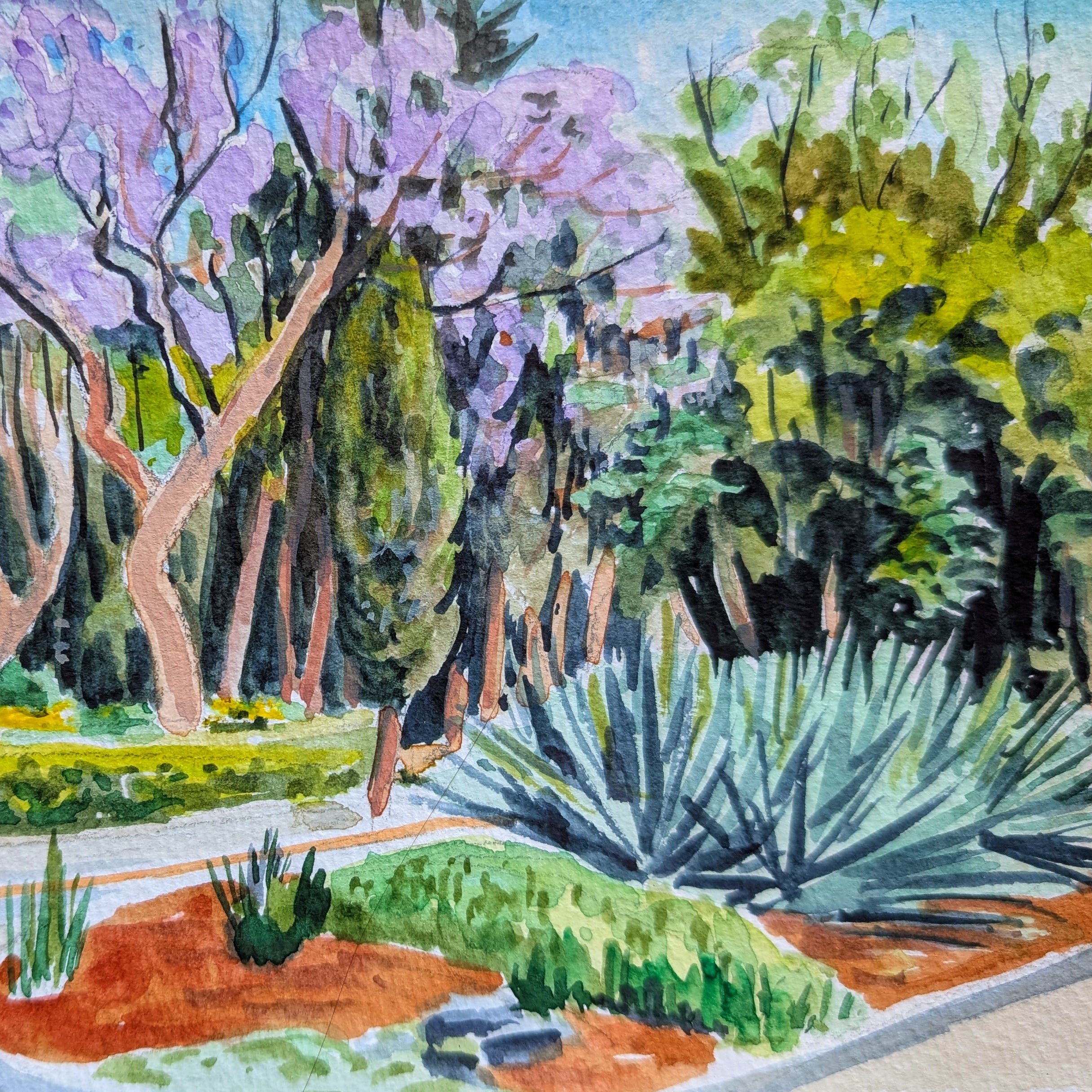
The other adjustments are, I think, more subtle and trickier. When coming back from an intense immersion in a very different place and culture, there’s always a bit of unreality: was that experience a dream? Or was it more real than this? If I was actually there, as I still am somewhat in my mind, what am I doing here, in this place that feels so reflexively normal? How have I changed? How do I hold these two very different experiences of reality together? (Just a minute ago, it seems, there were purple trees in bloom right outside my window…)
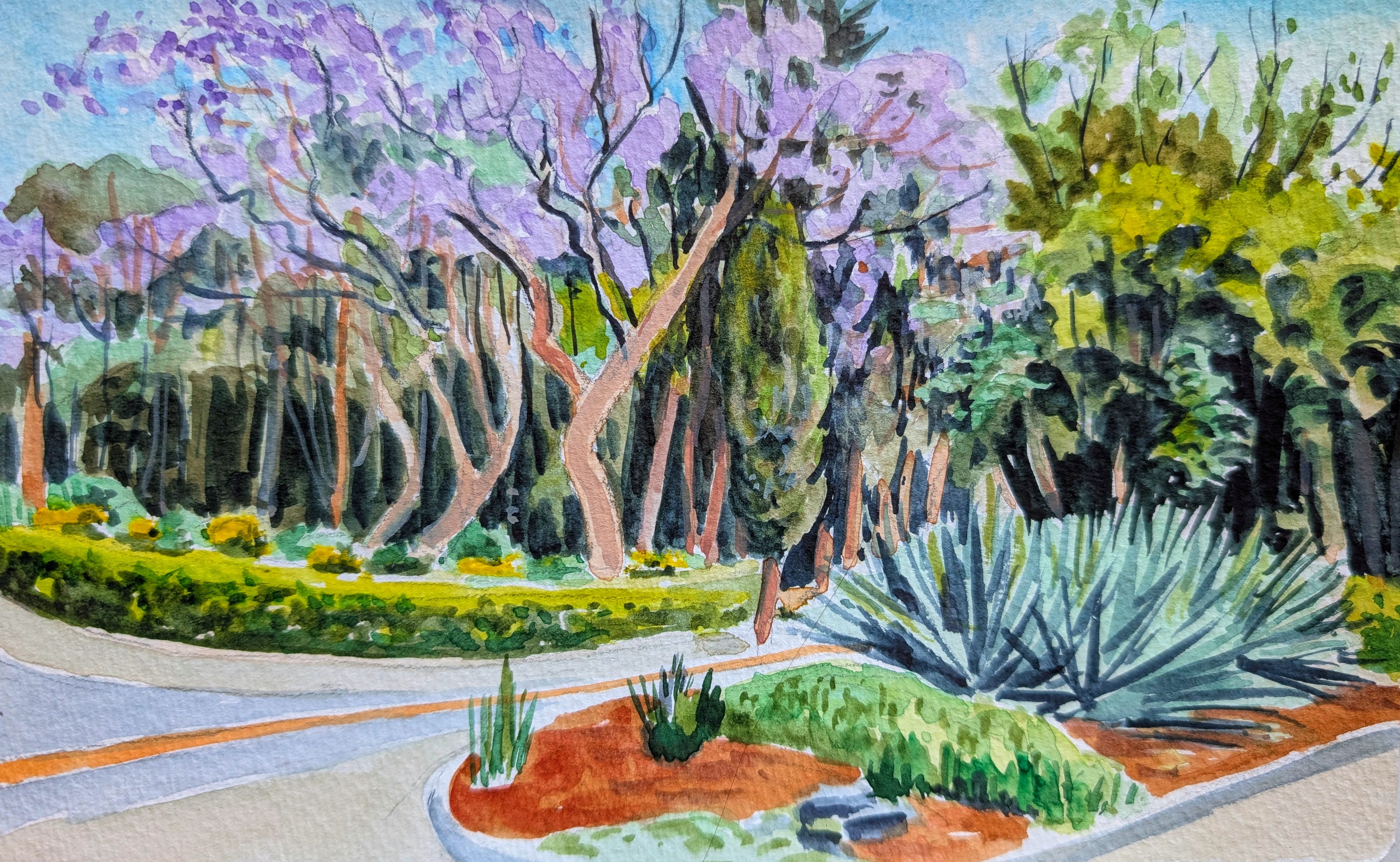
Jacarandas and agave at Los Pinos, the former presidential palace complex
I’ve been in Mexico City enough now that it doesn’t feel like a vacation but is another place I know (at least in parts) fairly well. I know how to get around by myself, how to meet my basic needs, where I’m safe and where I’m not, and I feel confident in my ability to communicate, ask questions, get help if necessary. When we’re there, we aren’t tourists in the same way as we were years ago; we return to favorite places, yes, but we are mainly living there, shopping for food and necessities, cooking our own meals, working at home, walking and using public transportation like locals do. The length of time is sufficient to become familiar with the rhythm and patterns of a particular neighborhood — what time your next-door neighbors get up and take their child to school; when their cat is likely to come out and greet you and roll in the sun; when the flower-seller sets up his stool and buckets in the park; when the knife-sharpener’s call will be heard in the evening; which policemen and -women are parked on the corner each day; whether the cars making U-turns will wait for you at the zebra crossing. The uneven spots in the sidewalk pavement become familiar; the rubber tree with its amazing roots, the tile-encrusted colonial residence, and the calla-lily planting become landmarks. You learn who eats at the torta shop every day, and why the handyman paints the insides of new terracotta pots in the courtyard; you start to recognize dogs as well as people. You notice that the neighbor’s maid has a bad limp, and feel worried for her climbing four flights of stairs to the rooftop laundry area. It amazes you that the jacaranda blossoms need to be swept away every couple of days - how can there be so many? A couple of blocks away, there’s a stand where your husband could get a replacement USB cable, and another selling pastries that look really good. The incessant cooing of the inca doves changes from an annoying repetition to a soothing one, and you notice the songbirds and hummingbirds in the trees overhead, and the particular sounds made by raindrops and wind on the building where you live. The people you pass everyday begin to recognize you, too, and exchange a buenas dias and a gentle nod with you — and you realize you are going to miss them.
I could go on with pages and pages of details like these, engendered in part because so much of life in Mexico happens outside, where it can be seen. That will never be the case in the north, and while the outdoor months here are precious, they are not lived quite as openly as in a land where homes and public buildings all incorporate indoor/outdoor space, and people move seamlessly almost all year long between interiors and exteriors without even a change of clothing. Would I really like living a more porous life, after a lifetime of privacy? I’m not sure. My attraction to year-round nature and warmth is certainly romantic, but perhaps naive.
Not everyone lives that way; many homes are open to interior courtyards or gardens, but not to the street. In the affluent parts of Mexico City, I watched as electric garage doors were opened by armed security guards; a chauffeured car would enter a white tunnel which was blocked by yet another set of interior doors, and those didn’t open until the outer one had closed. Razor wire or electric fences topped the walls of many private homes. Where we were staying, the condo complex of nine units arranged around a courtyard seemed quite relaxed, and the residents clearly knew each other well, but it had a 24-hour doorman, security cameras, and a one-way window. Less-fortunate people live in much more precarious situations.
And the running water, if you have it, isn’t safe to drink anywhere. Our kitchen had a separate tap with filtered water, but the taste was pretty bad and we weren’t sure of it. We washed our vegetables, fruits, and dishes with that water, bought bottled water for drinking, and boiled the filtered water to make tea. Although I think we’ve developed some resistance over time to the local bacteria, we always drink bottled water, beer, or sodas in restaurants and never order drinks with ice. One of the adjustments I’ve had to make upon returning is not to flinch after realizing I’ve run my toothbrush under the bathroom tap and put it in my mouth. It’s OK, I tell myself, you’re home now.
Just a quick hi and welcome back and also to send some sympathy. It can be tough to live in a rather divided society
Interesting observations. I've always been impressed that the front porch made it as far north as it did. It makes a Rust Belt town like Tyrone a lot friendlier in the summer, with so many families hanging out on their front porches, rather than out back on decks like proper American suburbanites. And in an Appalachian context, that other Afro-Caribbean import, the banjo, found its most natural habitat on the porch, a public/private, liminal space ideal for music-making.